
Author: Apex Engineering Sales

  • Cooling Tower Installation Requirements

    Cooling Tower Installation Requirements

    Author: Apex Engineering Sales   |   Last updated: July 15, 2026

    Quick Answer

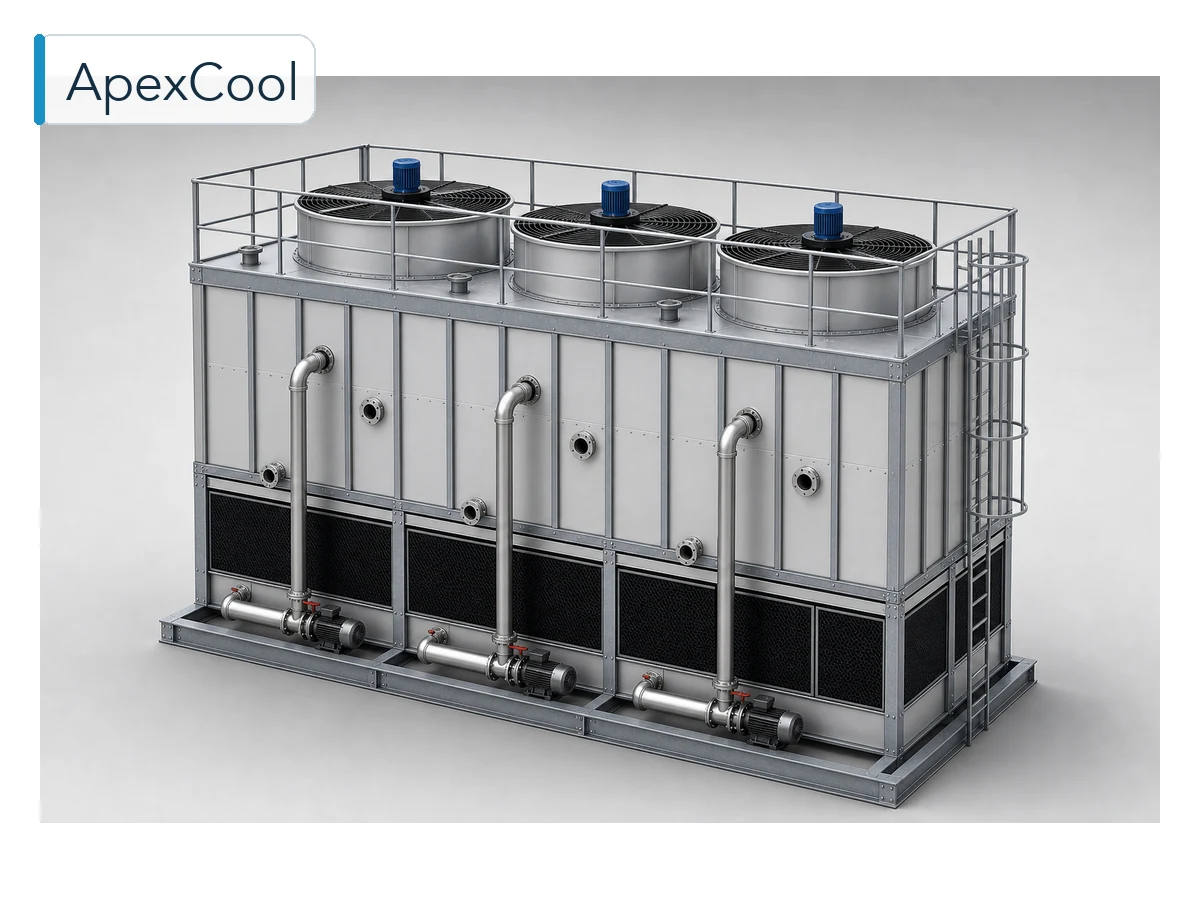
    Cooling tower installation should provide a stable foundation, clear airflow path, safe maintenance access, correct piping support, proper electrical connection and enough clearance to prevent hot air recirculation.

    Site and Foundation

    ItemWhy it mattersPractical note
    FoundationSupports tower load and vibration controlFollow project drawings and local code
    Air inlet clearancePrevents airflow restrictionConfirm with layout review
    Discharge clearanceReduces hot air recirculationAvoid blocked discharge areas
    Piping supportPrevents stress on tower connectionsUse independent supports
    Maintenance accessSupports safe inspectionProvide working space around key components

    Airflow and Clearance

    • Review layout drawing before delivery.
    • Confirm foundation dimensions and load capacity.
    • Check inlet and discharge clearance.
    • Install piping without forcing tower nozzles.
    • Verify motor rotation and electrical protection.
    • Complete commissioning records.

    Engineering Review Note

    Final cooling tower selection should be confirmed with complete project data, operating conditions and site requirements.

    Piping and Electrical Checks

    • Placing towers too close to walls.
    • Unsupported piping loads on tower connections.
    • Poor access for fill, fan or basin maintenance.
    • Ignoring local safety and lifting requirements.

    Related Apex Cooling Tower Pages

    FAQ

    Why does airflow clearance matter?

    Restricted airflow or hot air recirculation can reduce cooling performance and increase operating problems.

    Can a cooling tower be installed indoors?

    Some installations are possible with engineered ventilation, but airflow, discharge and access must be reviewed carefully.

    What should be checked before startup?

    Check foundation, piping, basin cleanliness, water level, fan rotation, motor wiring, nozzle condition and safety guards before operation.

    Related Articles

    Next step: If you already have project data, send your RFQ here and include flow, hot/cold water temperatures, design wet-bulb temperature, site altitude, power supply, noise target, water quality and material preference.
  • Cooling Tower Capacity Calculation Guide

    Cooling Tower Capacity Calculation Guide

    Author: Apex Engineering Sales   |   Last updated: July 15, 2026

    Quick Answer

    A common preliminary water-side heat load formula is Q = m × Cp × ΔT. For water, engineers often estimate heat load from flow rate and the difference between hot and cold water temperatures before final tower selection.

    Basic Heat Load Formula

    ItemWhy it mattersPractical note
    QHeat loadkW or kcal/h
    mMass flow ratekg/s
    CpSpecific heat of waterApprox. 4.186 kJ/kg·°C for water
    ΔTHot water temperature minus cold water temperature°C
    Wet-bulb temperatureClimate design limit°C

    Data Required Before Calculation

    • Confirm water flow unit.
    • Confirm hot and cold water temperatures.
    • Calculate temperature range.
    • Check design wet-bulb temperature.
    • Apply safety and project factors only after engineering review.

    Useful Formula

    Preliminary heat load: Q = m × Cp × ΔT. This is only an early screening formula; final equipment selection should follow engineering review.

    Example Calculation Structure

    • Mixing metric and imperial units.
    • Using dry-bulb temperature instead of wet-bulb temperature.
    • Treating a preliminary formula as final equipment selection.

    Related Apex Cooling Tower Pages

    FAQ

    What is the basic cooling tower heat load formula?

    A simplified water-side formula is Q = m × Cp × ΔT, where ΔT is the cooling range between hot and cold water.

    Can I select a tower only from this formula?

    No. The formula is useful for early screening, but tower selection also depends on wet-bulb temperature, airflow, tower type, materials and site conditions.

    What data should I send for a quote?

    Send flow rate, hot and cold water temperatures, wet-bulb temperature, altitude, power supply, water quality, material preference and site limits.

    Related Articles

    Next step: If you already have project data, send your RFQ here and include flow, hot/cold water temperatures, design wet-bulb temperature, site altitude, power supply, noise target, water quality and material preference.

  • Open-Circuit vs. Closed-Circuit Cooling Towers

    Open-Circuit vs. Closed-Circuit Cooling Towers

    Author: Apex Engineering Sales   |   Last updated: July 15, 2026

    Quick Answer

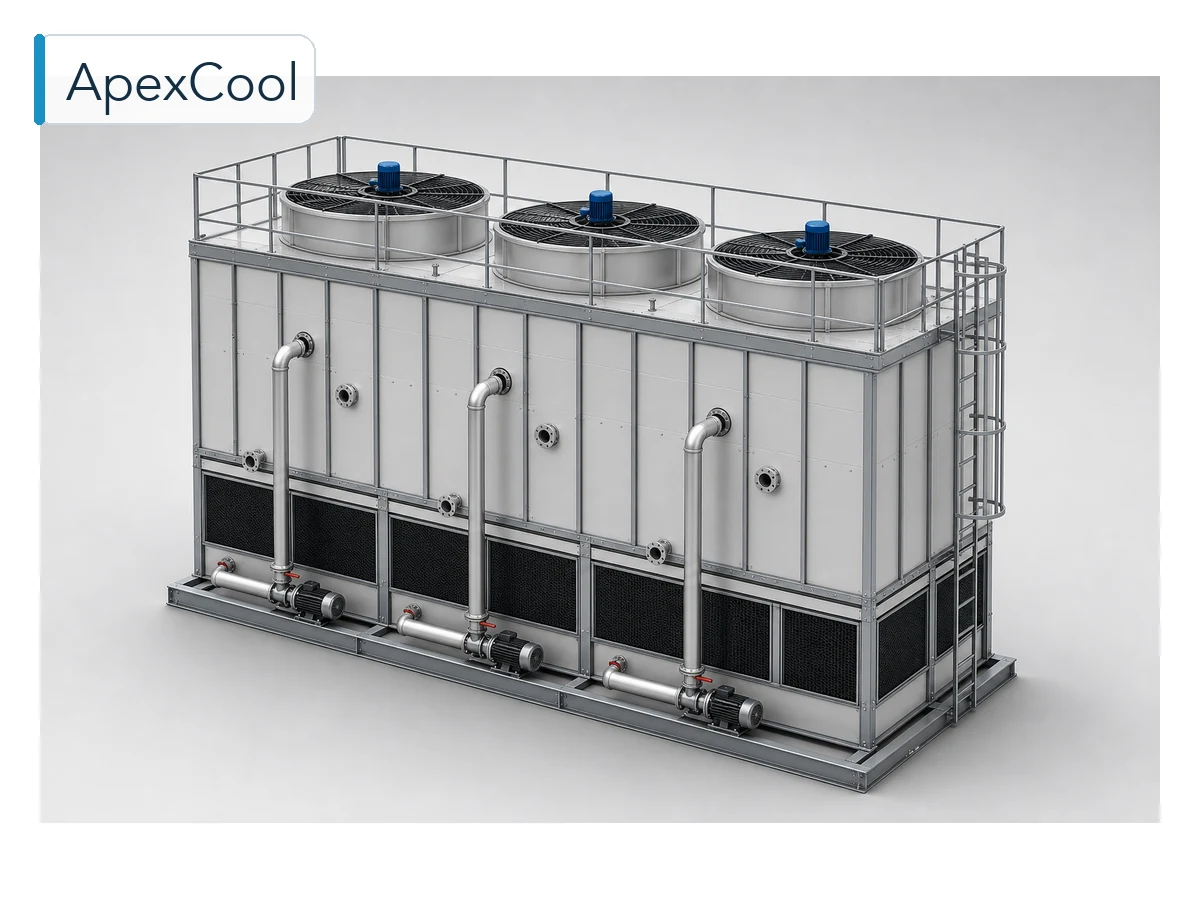
    Open-circuit cooling towers expose condenser or process water directly to air. Closed-circuit cooling towers use a coil or heat exchanger loop to keep the process fluid separated from tower spray water and ambient air.

    Key Difference

    ItemWhy it mattersPractical note
    Fluid contactProcess water contacts air directlyProcess fluid stays inside coil or loop
    Initial costUsually lowerUsually higher
    Process fluid cleanlinessRequires stronger water treatmentBetter isolation for process loop
    Maintenance focusFill, basin, nozzles, water treatmentCoil, spray system, water treatment
    Typical useHVAC and many industrial cooling dutiesProcess cooling where fluid cleanliness matters

    Comparison Table

    • List fluid cleanliness requirements.
    • Check maintenance capacity at site.
    • Estimate lifecycle water treatment requirements.
    • Compare footprint and access needs.
    • Confirm final selection with engineering review.

    Engineering Review Note

    Final cooling tower selection should be confirmed with complete project data, operating conditions and site requirements.

    When to Use Each Type

    • Assuming closed-circuit always means maintenance-free.
    • Ignoring water treatment in open-circuit systems.
    • Comparing only purchase price and not lifecycle operation.

    Related Apex Cooling Tower Pages

    FAQ

    Which cooling tower type is better for process cooling?

    It depends on whether the process fluid must remain isolated. Closed-circuit systems are often considered when fluid cleanliness and stable loop operation are important.

    Are open-circuit cooling towers cheaper?

    Open-circuit systems often have lower initial equipment cost, but lifecycle cost depends on water quality, treatment, maintenance and duty conditions.

    Can Apex help compare both designs?

    Yes. Apex can review the supplied operating data and discuss suitable open-circuit or closed-circuit options for engineering evaluation.

    Related Articles

    Next step: If you already have project data, send your RFQ here and include flow, hot/cold water temperatures, design wet-bulb temperature, site altitude, power supply, noise target, water quality and material preference.

  • How to Select the Right Cooling Tower

    How to Select the Right Cooling Tower

    Author: Apex Engineering Sales   |   Last updated: July 15, 2026

    Quick Answer

    To select the right cooling tower, define the process heat load, water flow rate, hot and cold water temperatures, design wet-bulb temperature, site limits, material preference and maintenance requirements before comparing tower types.

    Selection Inputs That Matter

    ItemWhy it mattersPractical note
    Heat loadDefines required cooling dutykW, kcal/h or refrigeration tons
    Water flow rateControls tower size and pump coordinationm³/h or GPM
    Hot / cold water temperatureDefines cooling range°C or °F
    Design wet-bulb temperatureDefines realistic cold-water limitLocal climate data
    Water quality and materialAffects corrosion resistance and maintenanceFRP, galvanized steel, stainless steel

    Step-by-Step Selection Process

    • Confirm application and process duty.
    • Collect flow and temperature data.
    • Check local wet-bulb temperature and altitude.
    • Choose open-circuit or closed-circuit design.
    • Review footprint, noise and maintenance access.
    • Send data for engineering review.

    Engineering Review Note

    Final cooling tower selection should be confirmed with complete project data, operating conditions and site requirements.

    Common Selection Mistakes

    • Selecting only by nominal tonnage.
    • Ignoring local wet-bulb temperature.
    • Using residential HVAC assumptions for industrial process cooling.
    • Forgetting water treatment and maintenance access.

    Related Apex Cooling Tower Pages

    FAQ

    What information is required for cooling tower selection?

    At minimum, provide water flow, hot water temperature, required cold water temperature, wet-bulb temperature, site altitude, power supply, water quality and material preference.

    Is nominal tonnage enough to select a cooling tower?

    No. Nominal tonnage is only a rough reference. Final selection should be based on heat load, water temperatures and local wet-bulb temperature.

    Should I choose an open or closed-circuit cooling tower?

    Open-circuit towers are often simpler and cost-effective. Closed-circuit towers help keep process fluid separated from ambient air and tower water. Final selection depends on process requirements.

    Related Articles

    Next step: If you already have project data, send your RFQ here and include flow, hot/cold water temperatures, design wet-bulb temperature, site altitude, power supply, noise target, water quality and material preference.