
Author: Apex Engineering Sales | Last updated: July 16, 2026
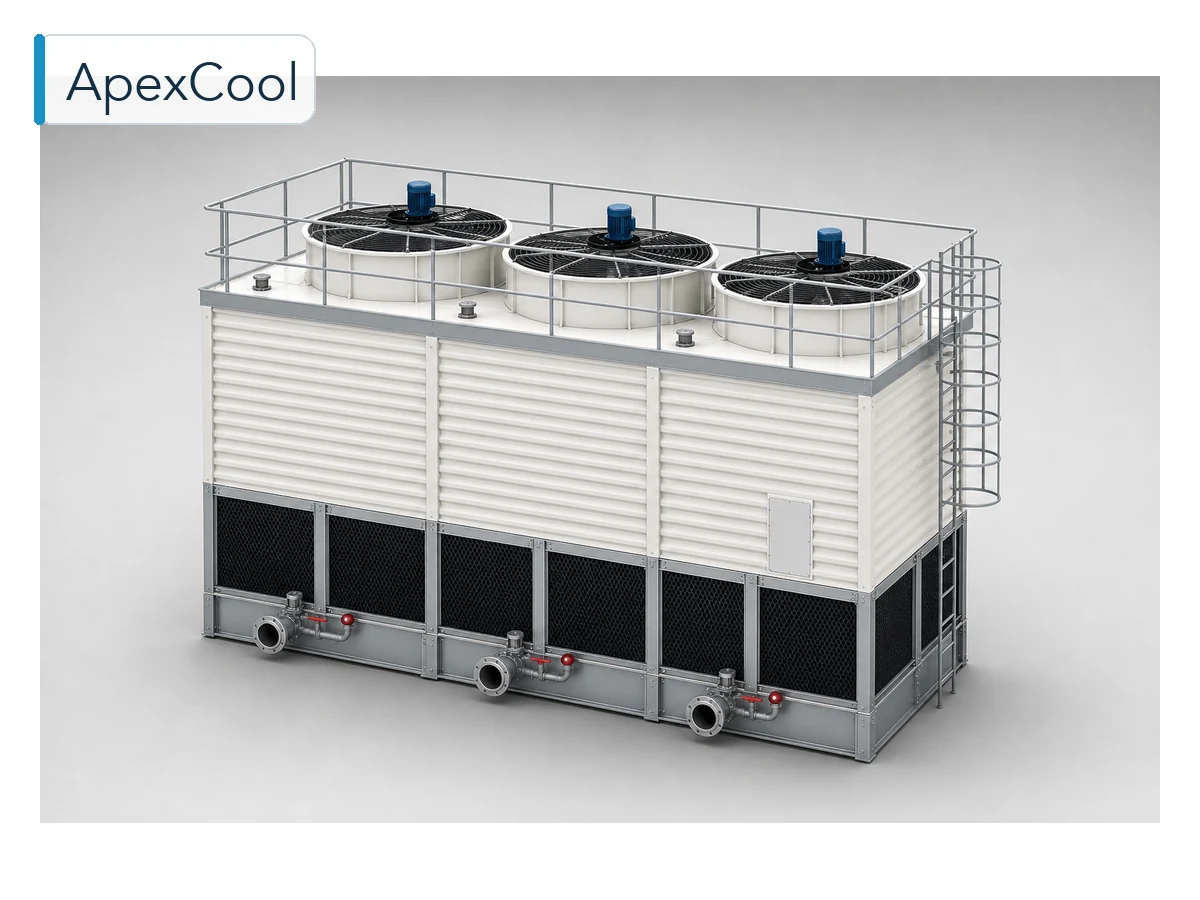
Featured image placeholder: Use an authorized process plant, equipment cooling or industrial cooling tower image before publishing.
Quick Answer
A process cooling tower should be selected around the actual production duty, not only around nominal tonnage. The buyer should define flow, entering and leaving temperatures, wet-bulb temperature, fluid sensitivity, water quality, operating continuity and maintenance conditions before final engineering review.
Process Cooling Tower Selection Inputs
| Input | Why it matters | Practical note |
|---|---|---|
| Process flow | Core hydraulic input | Use actual process duty, not estimated guess |
| Hot and cold temperatures | Defines required heat rejection range | Include normal and peak conditions if available |
| Wet-bulb temperature | Key ambient design value | Use project design basis |
| Fluid cleanliness sensitivity | Affects open vs. closed loop decision | Clarify contamination limits |
| Water quality | Affects maintenance and material review | State any scaling or corrosion concern |
| Operating continuity | Production downtime may be expensive | Clarify uptime and redundancy requirement |
When a Process Cooling Tower Search Becomes a Sales Opportunity
This keyword often comes from real industrial plants, plastics lines, metal treatment operations, chemical support systems, food processing or machinery cooling loops. That makes it a high-value B2B intent term, especially when the user also has project data and a replacement schedule.
Open-Circuit or Closed-Circuit for Process Cooling?
The answer depends on whether the process fluid can tolerate direct interaction with tower water, how sensitive the loop is to fouling or contamination, and how the owner wants to manage maintenance and water treatment. Process cooling selection should be based on the real loop and plant operating condition, not on label preference alone.
Documents That Speed Up Engineering Review
- Process flow sheet or duty summary
- Current equipment data sheet or nameplate photo
- Site layout or available tower area sketch
- Water treatment note or water analysis if available
- Any owner requirement for material, noise or control
Common Process Cooling Tower RFQ Errors
- Leaving out the process fluid type or cleanliness sensitivity
- Using nominal chiller duty without process-side confirmation
- Not separating normal duty from future expansion duty
- Ignoring maintenance access and plant routing limits
- Asking for a “best model” without sending real operating data
Related Apex Pages
FAQ
What is the main difference between a process cooling tower and a general cooling tower inquiry?
Process cooling projects usually need more detail about the actual production duty, loop cleanliness sensitivity and uptime requirement before final selection.
What data should be sent for a process cooling tower quote?
Send flow, temperatures, wet-bulb temperature, fluid details, water quality notes, layout limits and any material or noise requirements.
Can Apex confirm whether open or closed circuit is better from a short email?
An initial recommendation may be possible, but final selection should follow engineering review of the complete process and site information.
Related Articles
Next step: If you already have project data, send your RFQ here and include flow, hot/cold water temperatures, design wet-bulb temperature, site altitude, power supply, noise target, water quality and material preference.
Leave a Reply