
Author: Apex Engineering Sales | Last updated: July 16, 2026
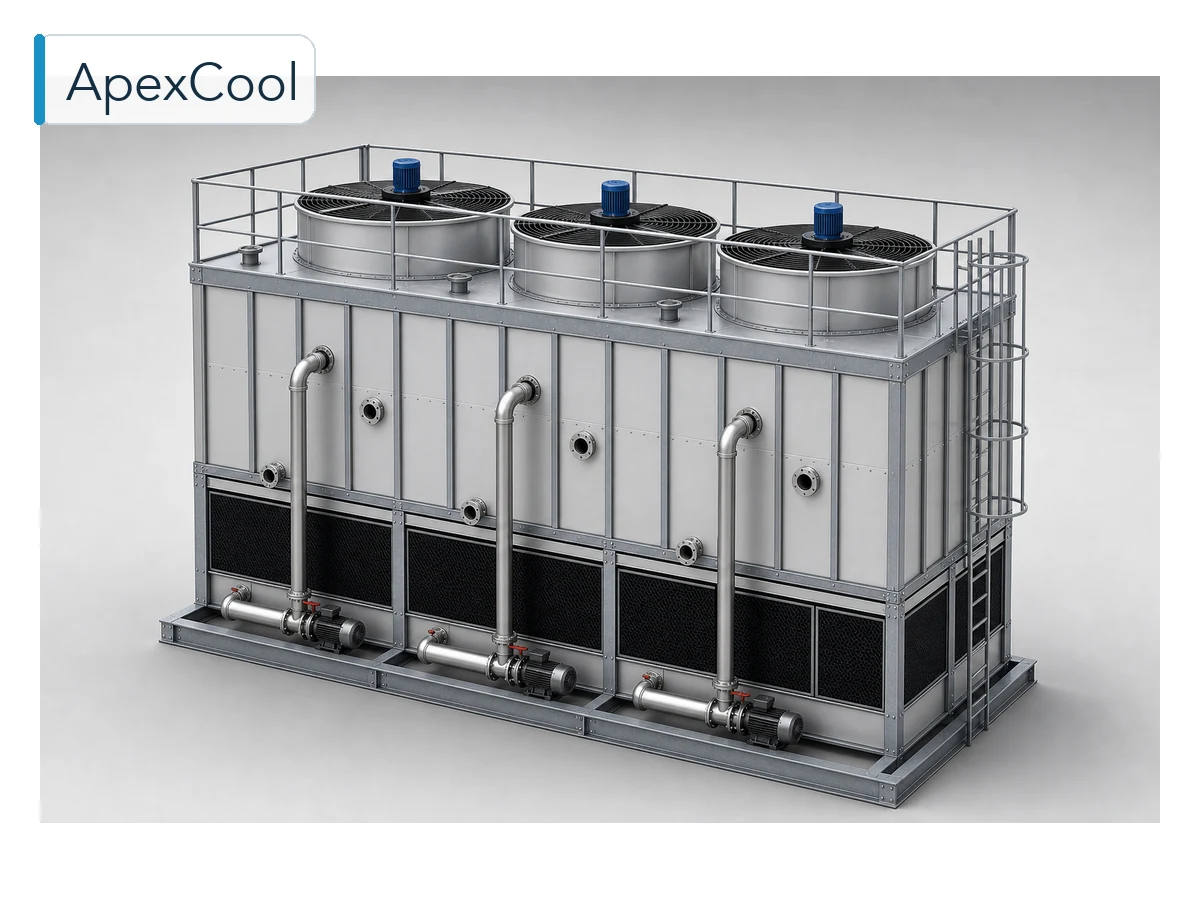
Featured image placeholder: Use an authorized replacement project, retrofit site or installed cooling tower image before publishing.
Quick Answer
A cooling tower replacement project should not start with “same model, same size” by default. The safer process is to review current duty, site limitations, connection points, structure, power supply, noise target and any updated operating requirement before final selection.
Replacement and Retrofit Review Checklist
| Check item | Why it matters | What to collect |
|---|---|---|
| Current operating duty | Original duty may no longer match actual use | Flow and hot/cold temperatures |
| Existing footprint | Replacement often must fit a restricted area | Length, width, height and service clearance |
| Connection orientation | Piping rework can change project cost and downtime | Nozzle size and inlet/outlet direction |
| Structural load | Roof or platform capacity may limit replacement options | Support structure details |
| Electrical supply | Motor compatibility affects commissioning | Voltage, phase and frequency |
| Noise requirement | Replacement projects often face tighter local constraints | Target limit or owner requirement |
Why Old Nameplate Data Is Not Always Enough
The existing nameplate is useful, but it only tells part of the story. Some sites have changed process load, water quality, ambient design assumptions or maintenance condition since the original tower was installed. A replacement quote based only on the old model number may miss those changes.
When Retrofit Is Better Than Full Replacement
Some projects do not need a complete tower change. If the structure is still serviceable and the issue is limited to fill, eliminators, fan components, basin leakage or selected internals, a retrofit review may be more practical. The right path depends on equipment age, condition, downtime limits and owner priorities.
Information to Send for a Replacement RFQ
- Photos of the existing tower and nameplate
- Flow and temperature data under current operation
- Site wet-bulb temperature and project location
- Foundation or roof support information
- Piping connection sizes and direction
- Required shutdown window or replacement timing
- Any preference for FRP, galvanized steel or other materials
Common Replacement Project Mistakes
- Assuming the same footprint guarantees the same performance
- Not checking service clearance for future maintenance
- Ignoring updated noise constraints
- Failing to separate urgent temporary needs from final long-term duty
- Requesting a price before confirming actual operating conditions
Related Apex Pages
FAQ
Can a cooling tower replacement be quoted from the existing model number alone?
The model number is a useful starting point, but final quotation should also consider current duty, site limits and any updated project requirements.
What is the first thing to check in a cooling tower retrofit project?
Check actual operating duty first, then confirm footprint, piping, structural load, power supply and maintenance access.
Does Apex support replacement and retrofit review?
Yes. Apex can review supplied site data, photos and duty information, then advise the next quotation step based on the available inputs.
Related Articles
Next step: If you already have project data, send your RFQ here and include flow, hot/cold water temperatures, design wet-bulb temperature, site altitude, power supply, noise target, water quality and material preference.
Leave a Reply