
Author: Apex Engineering Sales | Last updated: July 16, 2026
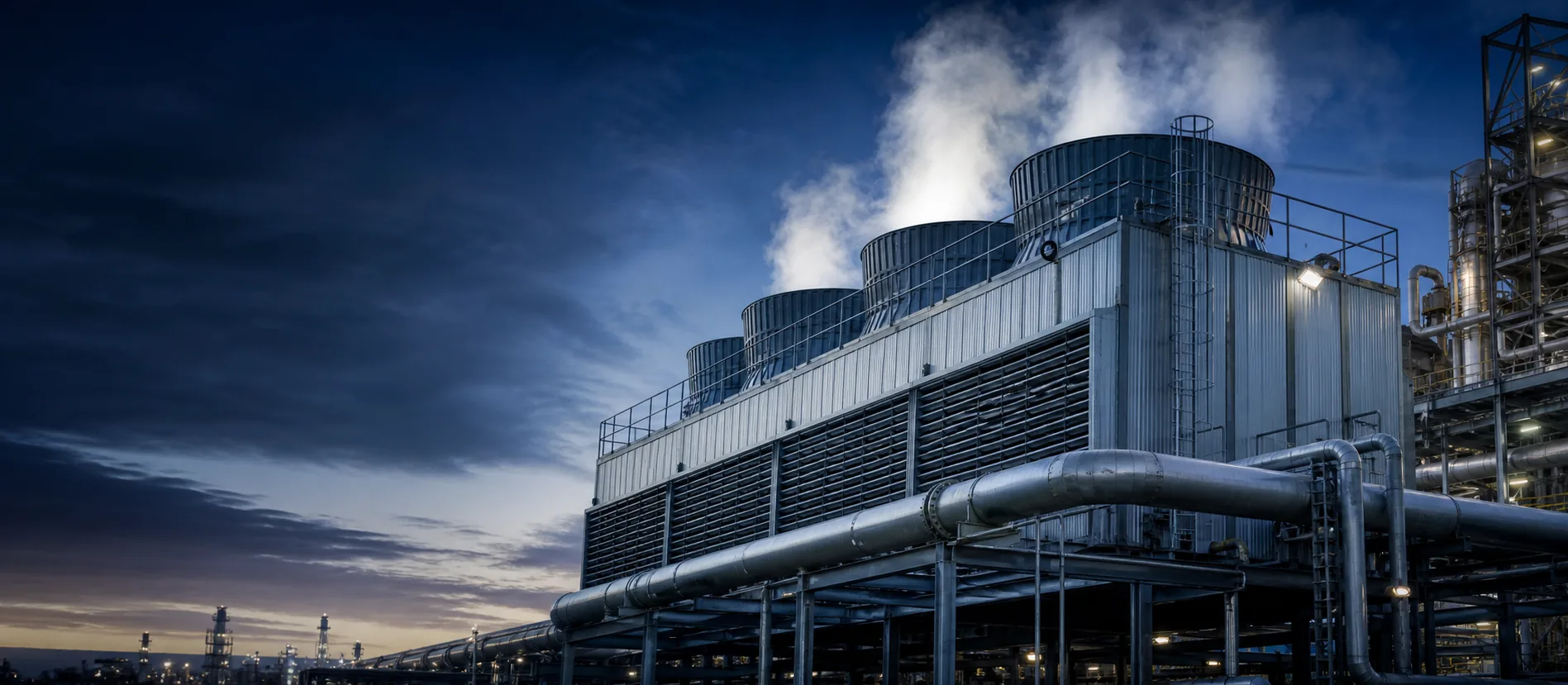
Featured image placeholder: Use an authorized factory, production line or finished cooling tower project image before publishing.
Quick Answer
An industrial cooling tower manufacturer should be evaluated on engineering response quality, product range, material options, export documentation support, and how clearly the team handles project duty data such as flow, hot and cold water temperatures, design wet-bulb temperature, site layout and noise target.
What Serious Buyers Usually Check First
| Evaluation item | Why it matters | What to ask for |
|---|---|---|
| Product range | Confirms whether the supplier can cover open circuit, closed circuit, crossflow and counterflow requirements | Series list with core applications |
| Engineering inputs | Shows whether the supplier selects by duty instead of guesswork | Flow, temperatures, wet-bulb and site checklist |
| Material options | Material choice affects corrosion resistance, weight and maintenance strategy | FRP, galvanized steel or stainless options |
| Export support | B2B overseas projects often need packing, drawings and commercial documents | Packing standard, lead documents and communication process |
| Response quality | A strong supplier asks specific technical questions before quoting | Initial technical review email or RFQ template |
How to Judge a Cooling Tower Manufacturer Beyond Price
Many buyers start with price, but price alone is a weak filter in industrial cooling projects. A better sequence is to confirm whether the manufacturer is actually screening the duty correctly, whether the proposed tower family matches the application, and whether the supplier can support the project through drawing review, export packing and commercial response.
If a supplier sends a quotation without asking for flow, hot water temperature, cold water temperature or wet-bulb temperature, the quotation may be fast, but the technical risk is high. For B2B projects, the more reliable pattern is simple: the supplier asks for complete duty data first, then narrows the selection.
Questions to Send Before Requesting a Quote
- What is the required circulating water flow?
- What are the hot water and cold water temperatures?
- What is the project design wet-bulb temperature?
- Is the tower for HVAC, process cooling, condenser water or a closed loop?
- Are there site limits for footprint, height, access or lifting?
- Is there a material preference such as FRP, galvanized steel or stainless steel?
- Is there a specific noise target or electrical supply requirement?
Export Project Risks Buyers Often Miss
- Assuming all “cooling tower manufacturers” handle export packing the same way.
- Comparing quotes that were based on different wet-bulb assumptions.
- Ignoring basin, pipe connection and access constraints until late-stage review.
- Choosing only by lowest unit price without checking maintenance and installation implications.
When a Manufacturer Is a Better Fit for OEM or Distributor Work
For OEM, private-label or distributor sourcing, the buyer should also confirm whether the manufacturer can keep model data organized, separate project communication cleanly and support repeated RFQ handling. In these cases, consistency of engineering review and documentation response is often more important than a one-time low quote.
Related Apex Pages
FAQ
What should an industrial cooling tower manufacturer ask before quoting?
At minimum, the supplier should ask for flow, hot and cold water temperatures, design wet-bulb temperature, site conditions, material preference and project country.
Is a cooling tower factory always the best supplier choice?
Not automatically. The better choice is the supplier that combines manufacturing capability with clear engineering screening, practical documentation support and reliable export coordination.
Can Apex quote directly from a nameplate photo?
A nameplate photo can help with reference, but final selection should still be reviewed against actual project duty, site conditions and required performance data.
Related Articles
Next step: If you already have project data, send your RFQ here and include flow, hot/cold water temperatures, design wet-bulb temperature, site altitude, power supply, noise target, water quality and material preference.
Leave a Reply